Around 7 or 8 years ago, my parents made the decision to move to Australia’s most southern state, Tasmania, so it was inevitable that I would start to see a bit more of this wonderful island.
Late in 2010, Sarah and I made the decision to spend the New Year period there, so over a couple of weeks, we had our most thorough exploration to date.
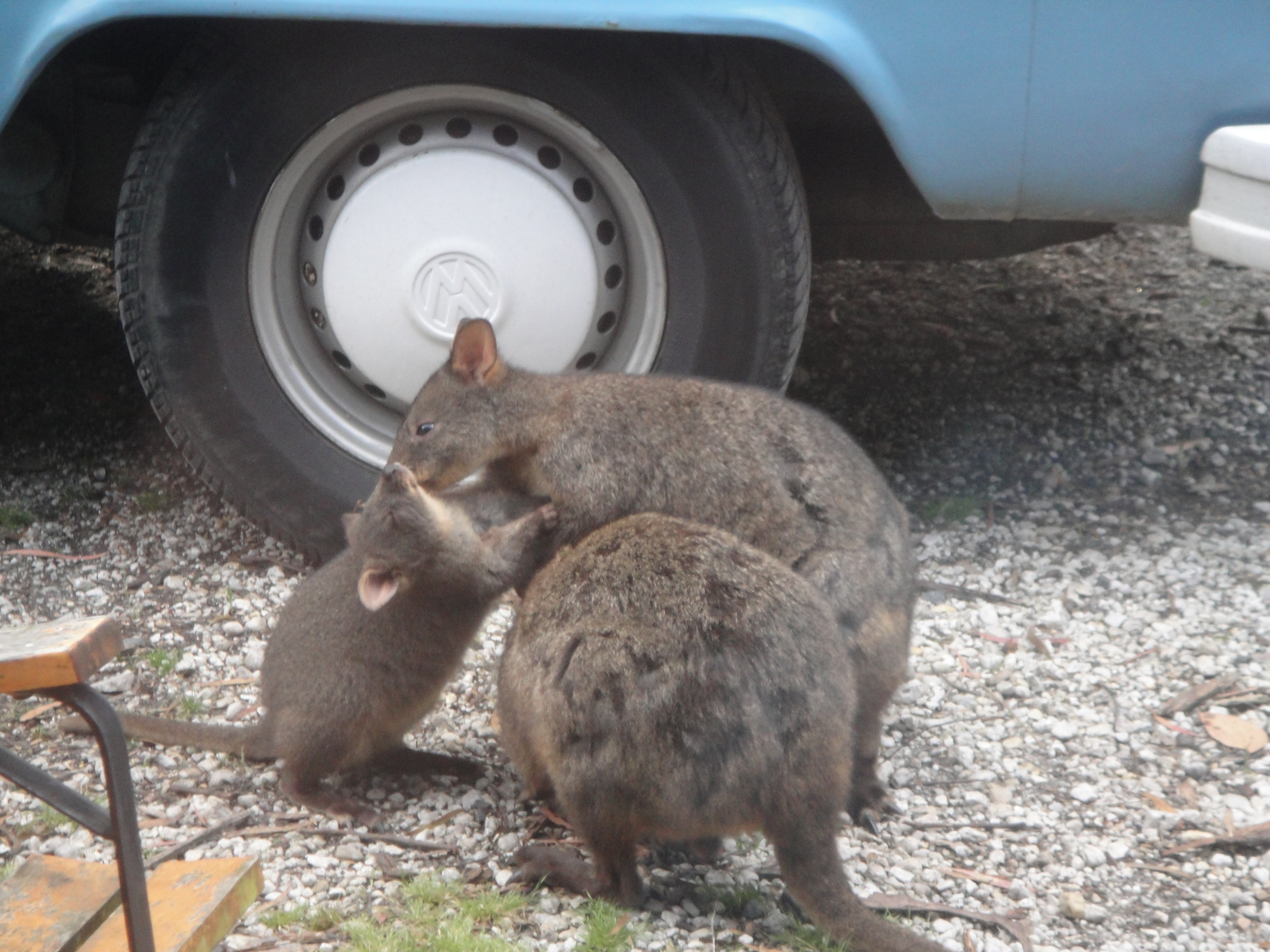
A mother and her 2 young Pademelons at my parents place
We started our journey on the north-west coast near Somerset at my parents place, where immediately we came face to face with some of the islands unique native wildlife.
For new years eve itself, we would down on the south-east coast near Marion Bay, so it wasn’t long before we were on the road, east towards Launceston, before take a south, then easterly route to the coast.
The glimpses of coastline we saw were certainly stunning, however we were definitely disappointed that for much of that leg, the road actually veered inland slightly, so we certainly didn’t see as much of the coastline as we’d have liked.

Looking down the coast, south of Swansea
The primary reason for our trip at this time of year was to indulge in several days of revelry at the Tasmanian edition of the “Falls Festival” at the gorgeous Marion Bay.
Over several days we were able to relax in the sun, listen to a great variety of music with the occasional trip to the beach itself (although the water temperature was still rather cold at this southern end of the continent).
It was a great way to bring in the new year and certainly something we’d entertain doing again.
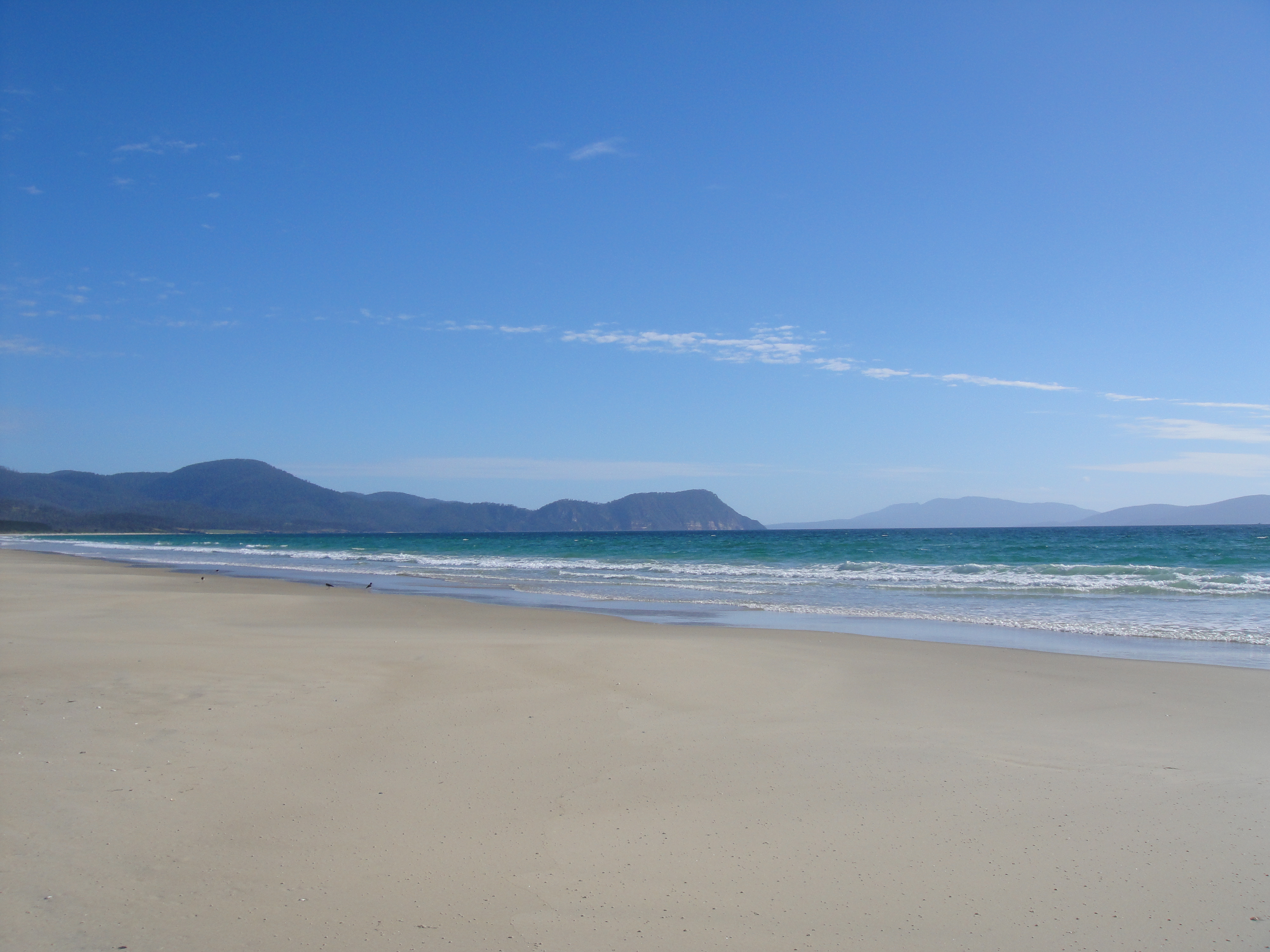
The pristine sands of Marion Bay
Given how close we were to the south-east point of the island, we felt it only right that we indulge in some history and visited the former penal settlement of Port Arthur.
Steeped in history, it unfortunately made global headlines for the wrong reasons in 1996 when one of the worlds worst shooting atrocities took place there when 35 people were killed and another 23 wounded by the now infamous gunman, Martin Bryant.
The only positive from this terrible incident is the incredibly tight gun control this country now has, hopefully preventing anything like this from occurring again.

Port Arthur, a UNESCO World Heritage sight since 2010
It’s easy to forget, surrounded by such beautiful old buildings, the very dark past this place has had. Housing convicts in terrible conditions, it was also the sight of the British Empires first boys prison.
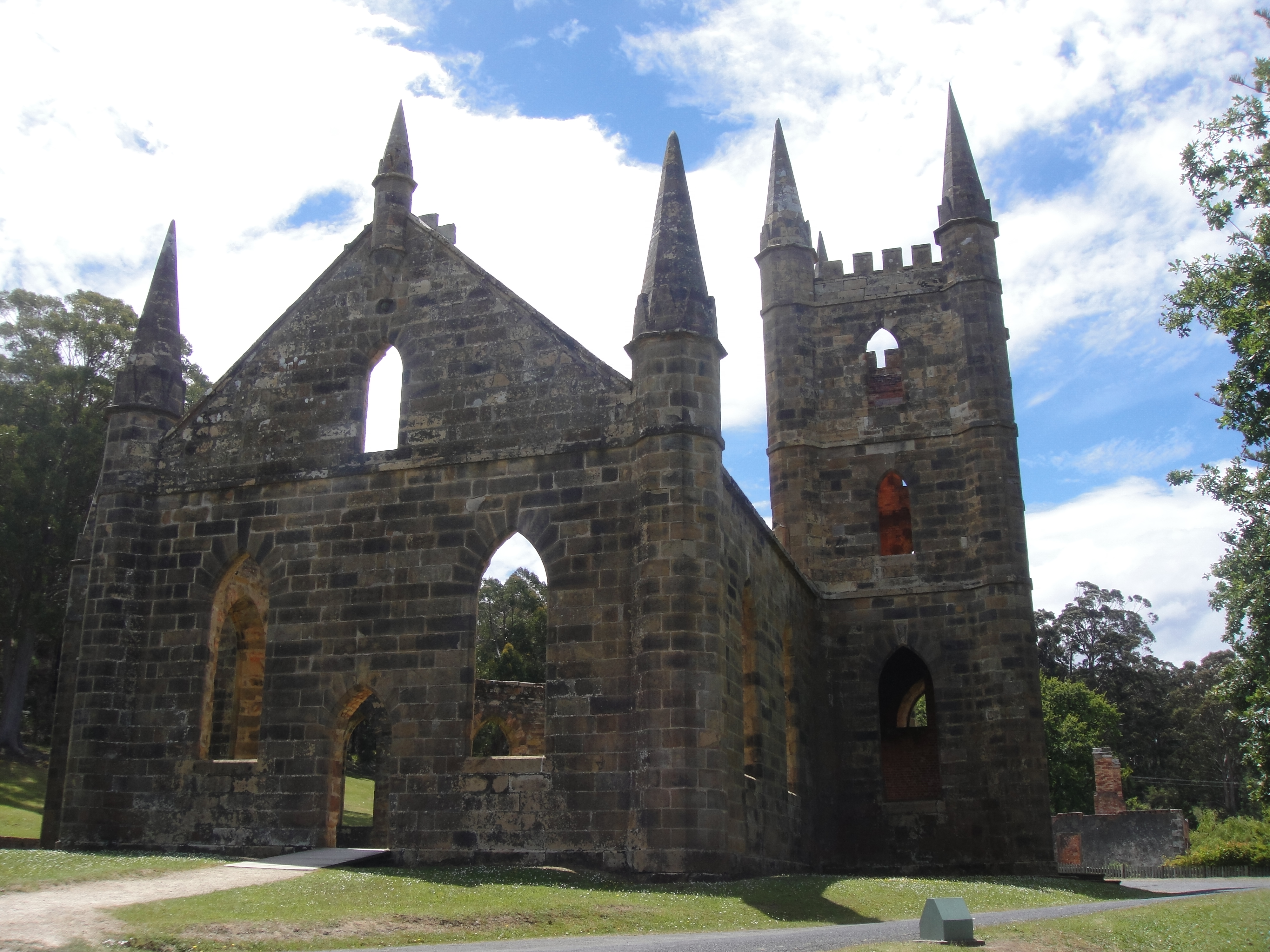
The convict built, non-denominational church
We only had a handful of days in the capital of Hobart, opting for the budget accommodation of the Pickled Frog Backpackers on Liverpool St. It may have been budget, but after several days at the music festival, the communal showers sure felt like heaven!
Our timing was good, as we did manage to catch the last day of the ‘Taste of Hobart’ food festival on the site of the iconic Salamanca Market.
There certainly was plenty going on at this time of year, and the weather certainly helped us enjoy this gorgeous old city with its many historic buildings.
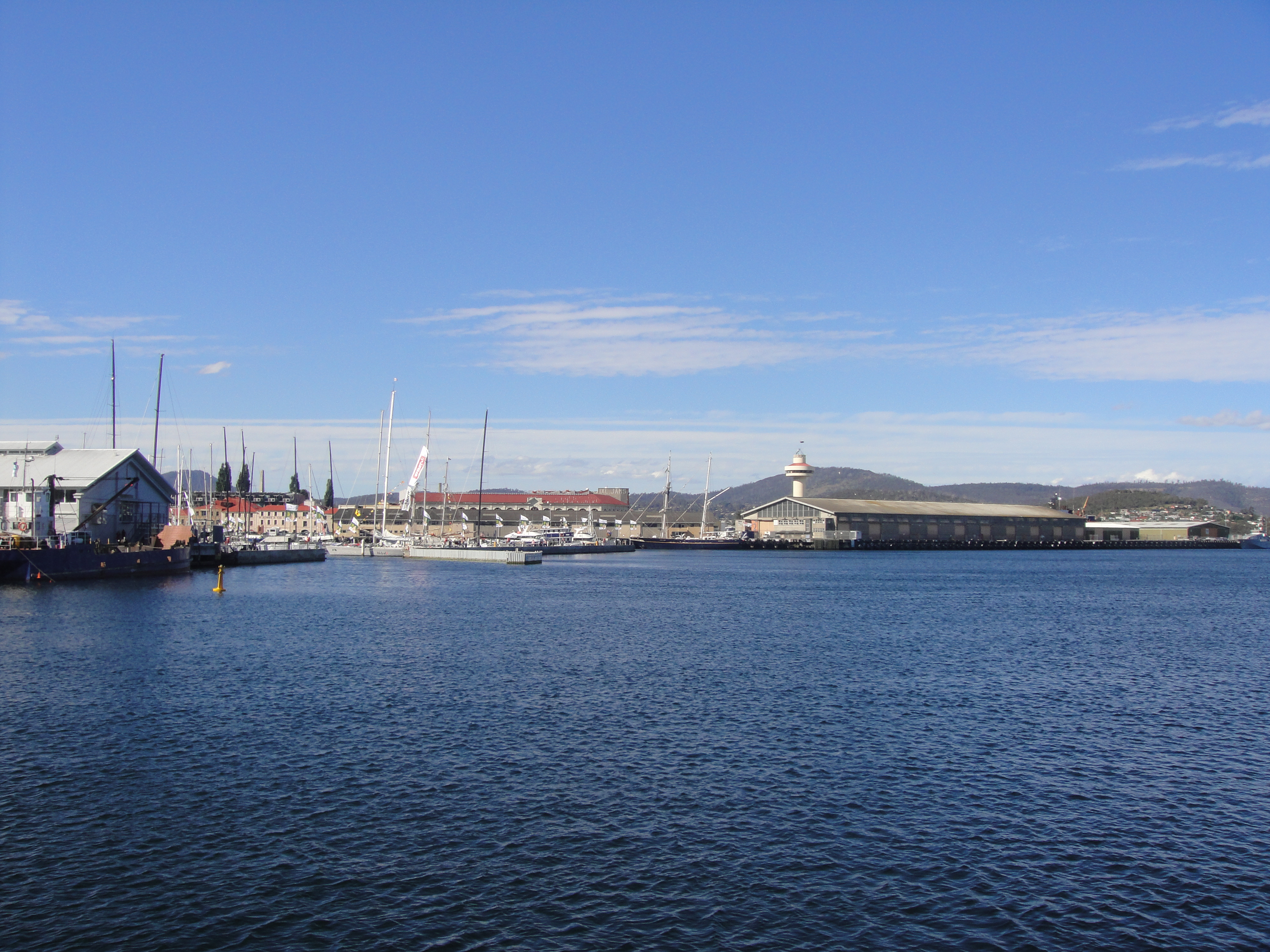
Constitution Dock
It was also the right time of year to catch some of the boats that had arrived in the harbour, as competitors in one of the several yacht races that culminate in this southern city (the most famous is the Sydney to Hobart, but there is also the Melbourne-Hobart and the Launceston-Hobart which race around the same time).
Due to its smallish population, the streets of this city felt peaceful and quiet, combined with many old buildings, it was easy to feel like you were stepping back in time. Old Hobart Town also delivered us some delicious baked treats as we had a quick lunch in some of the maze-like streets.

Historical Hobart near Battery Point
Overlooking the city is the impressive Mt Wellington. We took the time to make our way to the top and were rewarded with some great views of the city and also south along the coast. Despite the warm summers day we’d been experiencing down at sea level, it was ridiculously cold at the mountain top. Still it was worth the effort for the views alone.

Looking down on Hobart & up the Derwent River from Mt Wellington
Leaving Hobart, we settled on a route that would take us to the sparsely populated west of Tasmania. Most of this side of the state is natural wilderness, so it really can be lonely on the roads out this way, with only a handful of small towns along the way.
We’d booked accommodation in the mining hamlet of Queenstown, but before settling in to check out this place, we traveled a little further to the only town on the west coast, Strahan.
Strahan is a gateway for people wanting to cruise down to the Gordon River and some of the other out of the way locations on this remote coastline.

Looking down on picturesque Strahan
Strahan was once a major commercial harbour, and the remnants of this past can be see all around the shores of Macquarie Harbour on which the town sits.
A small tourist railway runs between Queenstown & Strahan (finishing at a place called Regatta Point) and by pure chance we timed our visit with the arrival of the train!
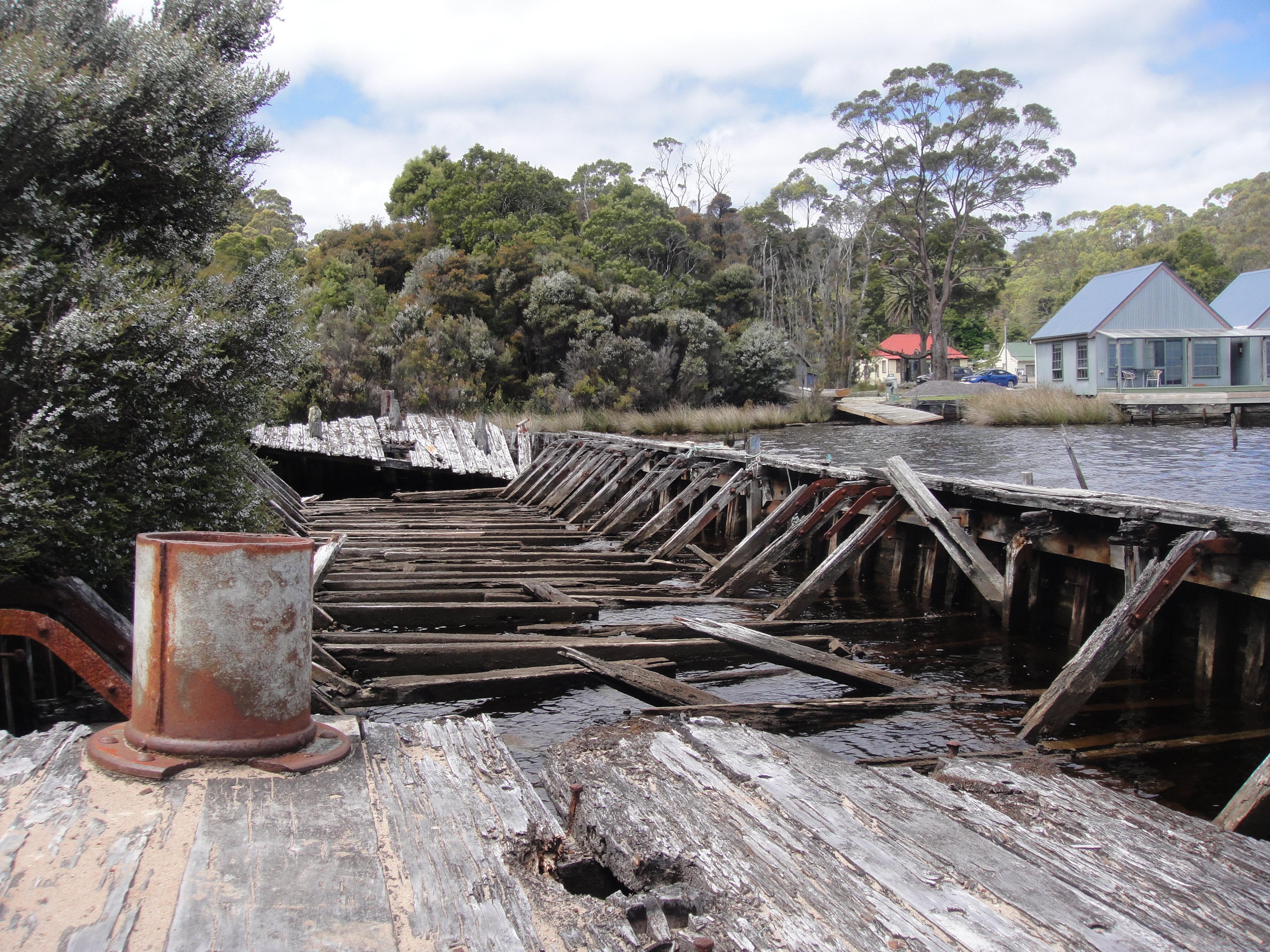
A relic of Strahan commercial past

Regatta Point, terminus of the West-Coast Wilderness Railway
We didn’t really need to choose Queenstown as our place to stay in the west, and with the benefit of hindsight, we probably wouldn’t have.
I was intrigued by the place, having in the past read of its notorious sporting oval. Due to the harsh environment here, the grass has apparently never taken well, so their sports are conducted on an oval covered entirely in gravel (they breed them tough here it would seem). This was something I had to see.
The only problem was, we couldn’t find it! For such a small town, it certainly seemed far more difficult than it should have been. Eventually we climbed a nearby hill with lookout on top, and with this birds eye view located the oval.

Queenstown’s notorious gravel sports oval
Queenstown itself was built on mining and I’m assuming it remains the only reason many people stay in this remote and desolate place. Gold first, then copper, drew people here, and it was in a relic from this prosperous past that we’d chosen to stay.
The Empire Hotel was built back in 1901, and aside from the odd coat of paint and a few poker machines, it didn’t appear that much had been updated since.
Huge portraits of English monarchs still adorned the walls at the top of a grand staircase. Both the late Queen Victoriaand the still reigning Queen Elizabeth II, however in their portrait, she bore a much more youthful visage than she does today.

- The once grand Empire Hotel. A relic of the boom times
Queenstown is also renowned for it’s moonscape hills, and the drive out of town the following morning, gave us a great view of them. Huge mounds of largely barren rock surround the town, creating an eerie lunar landscape (excess rock from the mining works) which I’m sure in winter, is more impressive again.
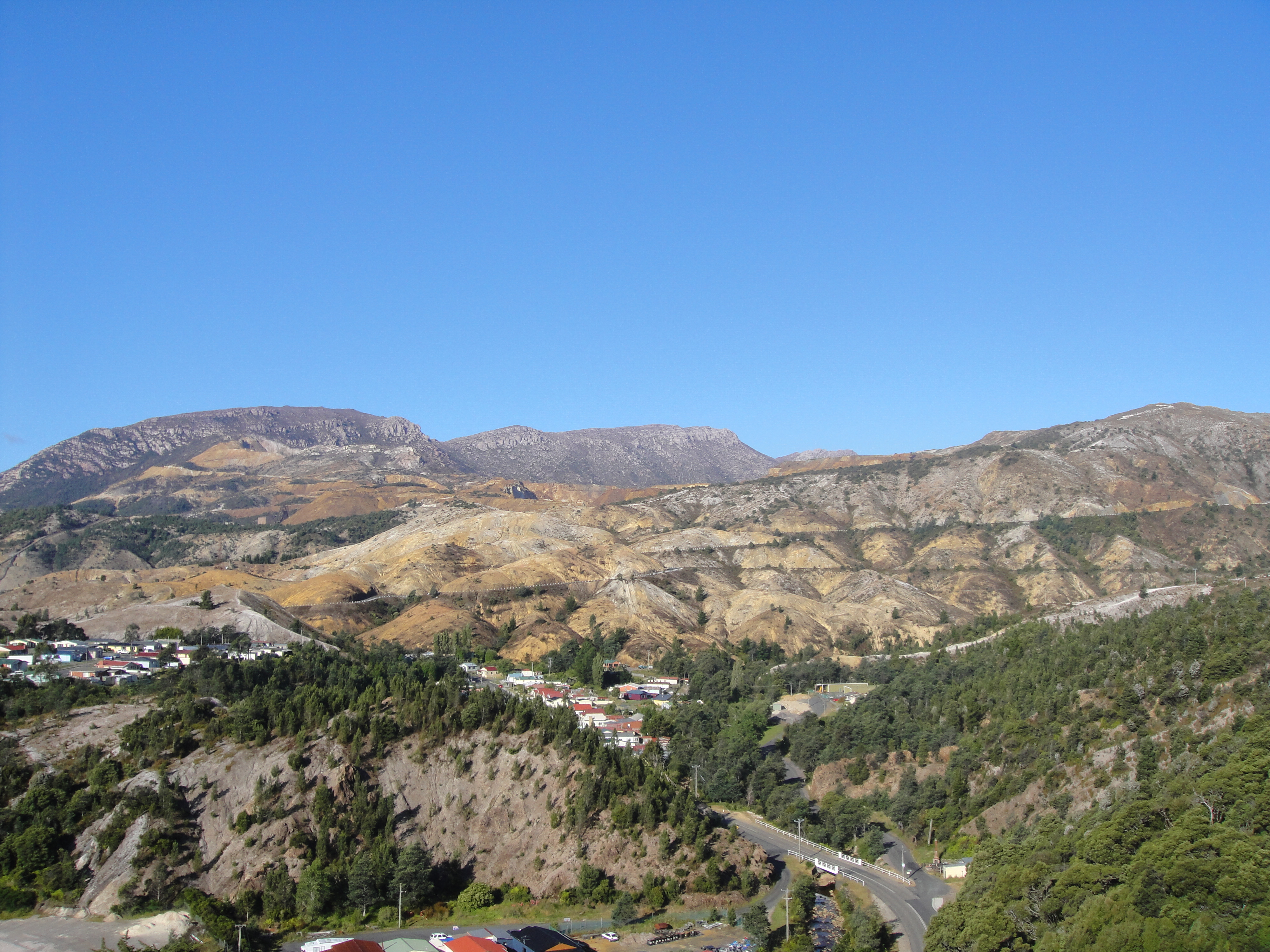
The lunar landscape
We planned to complete our circuit of the island by this evening, and only one stop remained along the way (well it was in fact a rather lengthy, but worthwhile detour), Cradle Mountain.
Yet another UNESCO World Heritage sight, it is part of the Tasmanian Wilderness World Heritage Area and is one of the last expanses of temperate wilderness in the world making it home to many unique plants and animals.
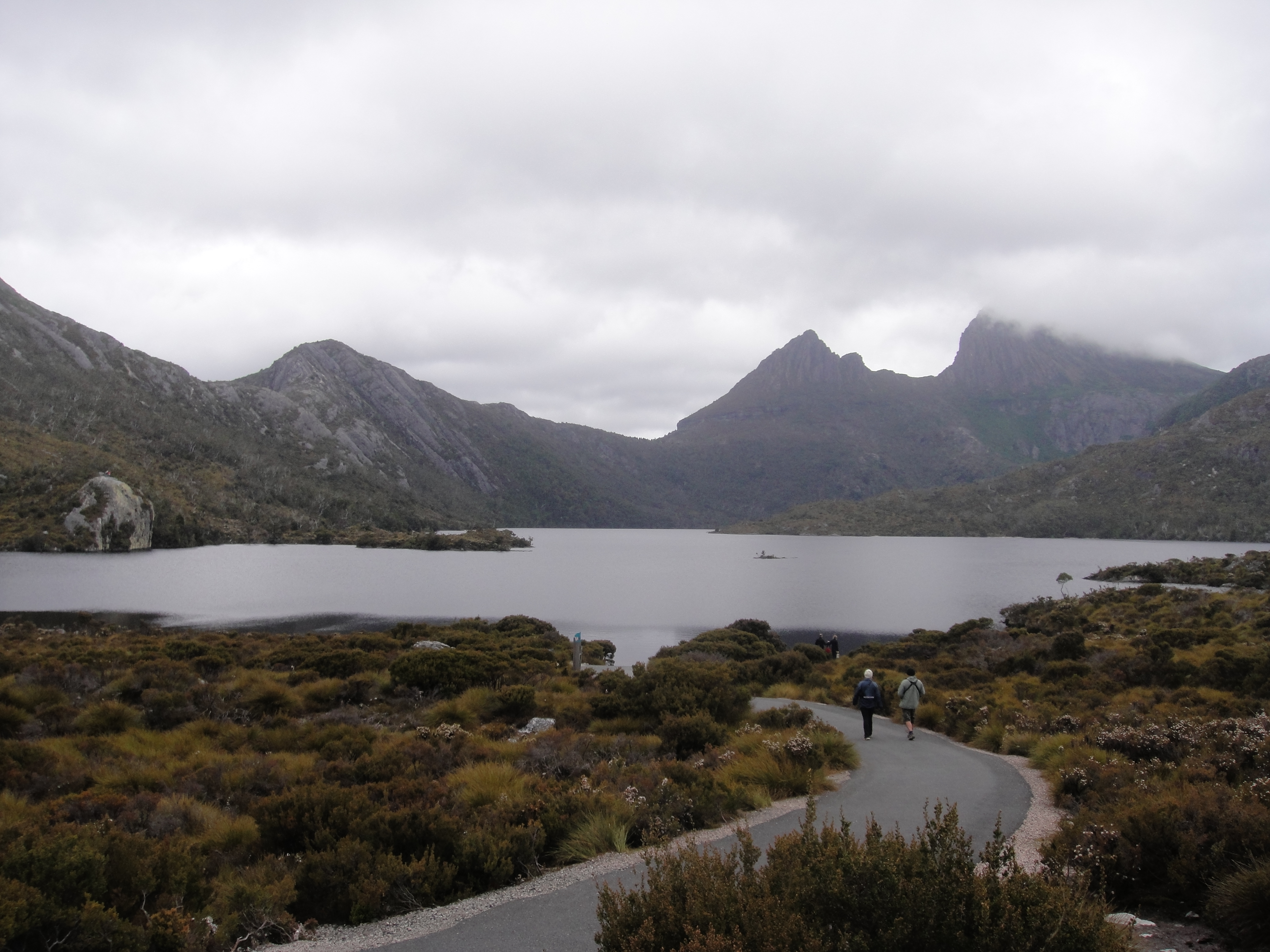
Looking over Dove Lake towards Cradle Mountain
With only a few hours time available to us, we took one of the walking trails around Dove Lake, however there are far lengthier treks available to keen hikers, some taking in several days at a time.
It really was a beautiful spot, and one we’d be very keen to return to with a bit more time available to us.
As an alpine region, it receives much winter snow which I’m sure would make this place even more magical.
On our 2012 trip to Vietnam, we actually spent several days with a married couple who both live and work in a lodge/resort not too far removed from the park itself. Quite the office to wake up in!
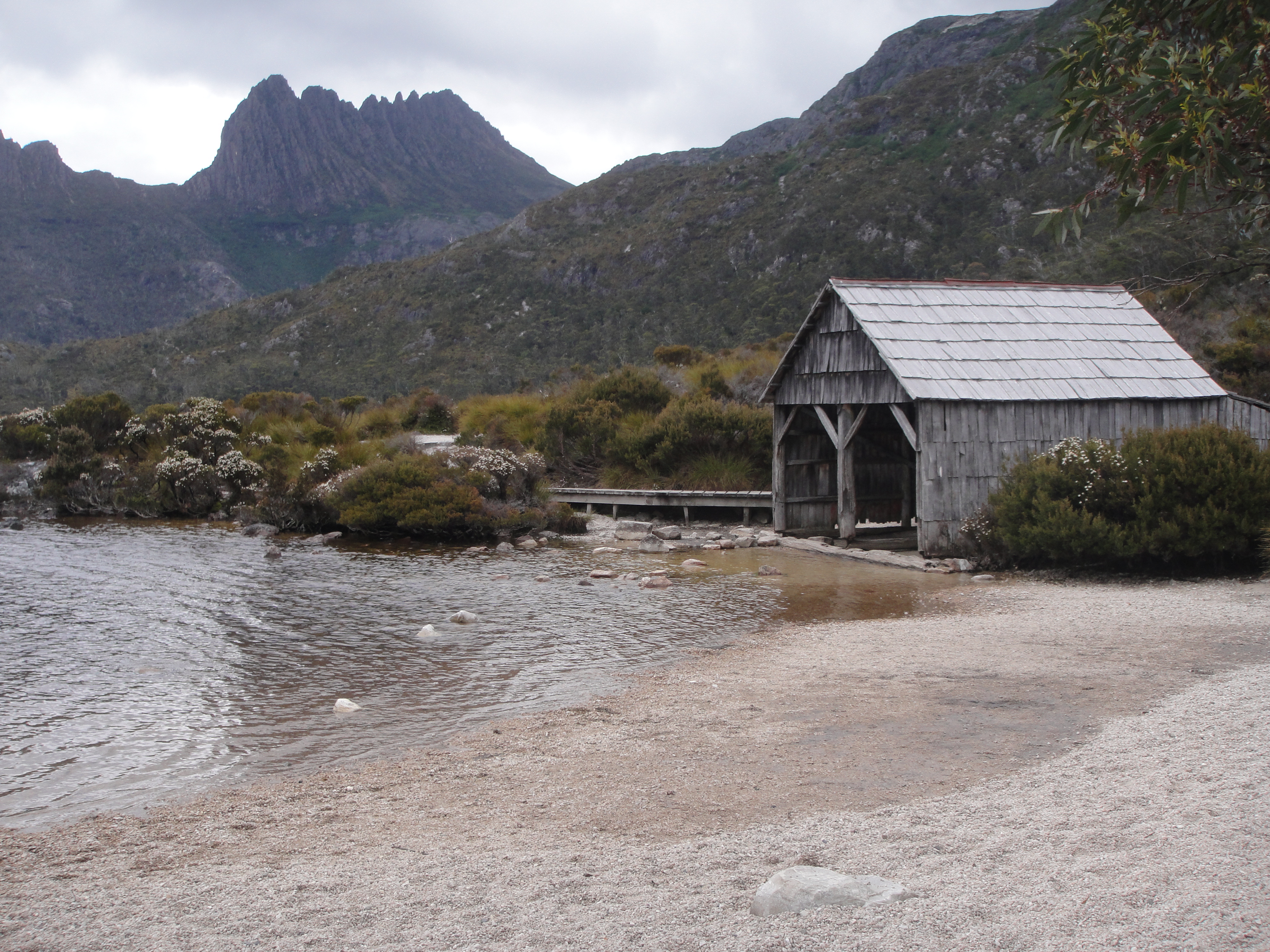
Boathouses built on Dove Lake back in the 1940’s
The relocation of my parents provided the excuse for us to explore this wonderful place, but really, good food, great local beers and incredible natural beauty, are all reasons themselves for us to keep going back (as well as my parents of course!)
 theworldwithchrisandsarah