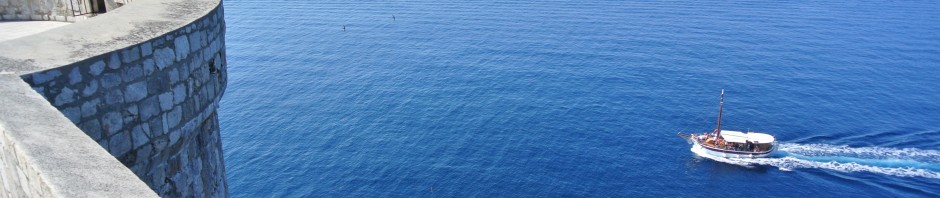
All roads may lead to Rome, however all rivers (well, the Mekong & Nam Khan rivers at least) lead to Luang Prabang. This city is simply gorgeous and to finally reach it was satisfying indeed.
It is certainly one of the most popular tourist destinations in Laos, and has been on the UNESCO World Heritage list since 1995. A mix of old French colonial buildings and ancient religious and cultural sights, it really is ideal for wandering about on foot as there is also not a huge amount of traffic.
We had a few days here, so started by separating from our group and doing a bit of exploration on our own. The weather wasn’t ideal, certainly not cold, but there was a bit of morning drizzle and plenty of cloud about.
The centre of town is dominated by a hill upon which sits the Wat PChom Si which we thought fit to climb to. Our reward was gorgeous panoramic views of the city, with views across both rivers.
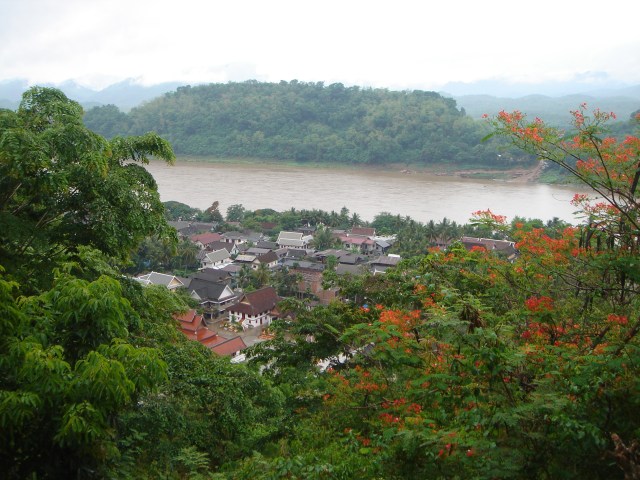
Views from Wat Chom Si
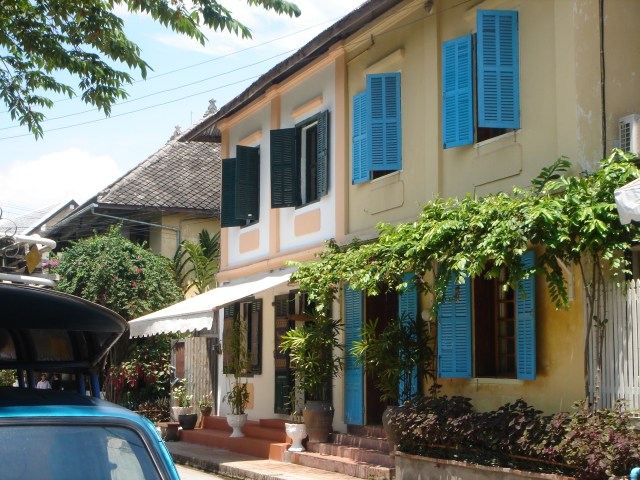
Beautiful quiet streets
It really was a day of leisure, and as we approached the afternoon, even the weather fined up and it became quite a hot day. A few of the Gecko’s crew opted to hire bicycles, however as Sarah has not done the whole bike thing since an unfortunate accident in Vietnam back in 2006.
Another of Luang Prabang’s delights that is rather famous is its night market. Unlike Bangkok, which has many markets loaded with plastic toys and fake Rolex watches, the market here has much more local handcraft, be it jewellery, artworks or clothing.
Many of the stalls were manned by gorgeous old ladies, but don’t be fooled, they still know how to drive a hard bargain!
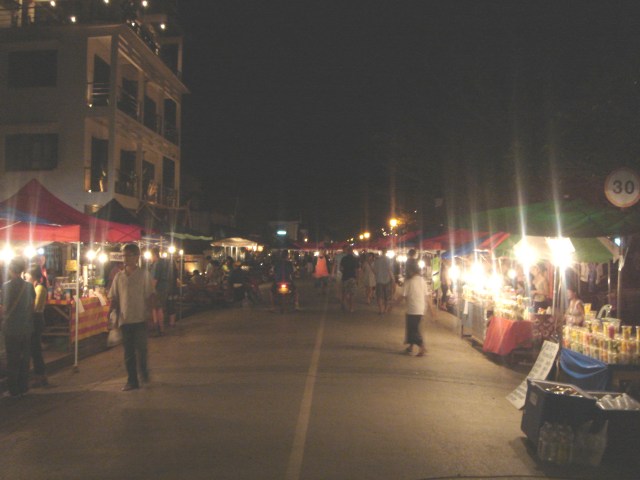
Luang Prabang night market
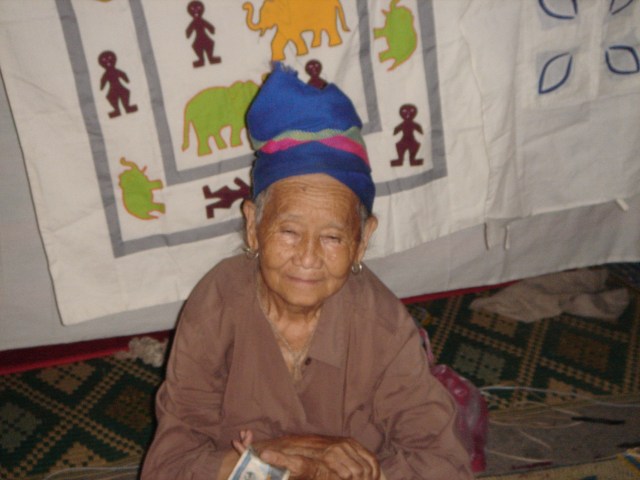
No english, but this old crone knew how to earn her Kip
The following morning we rose early in anticipation of seeing the monks walk the streets to collect their morning fare from locals and the odd tourist. It is certainly quite mystical seeing this procession of men in orange clutching their baskets and receiving rice for their daily sustenance.
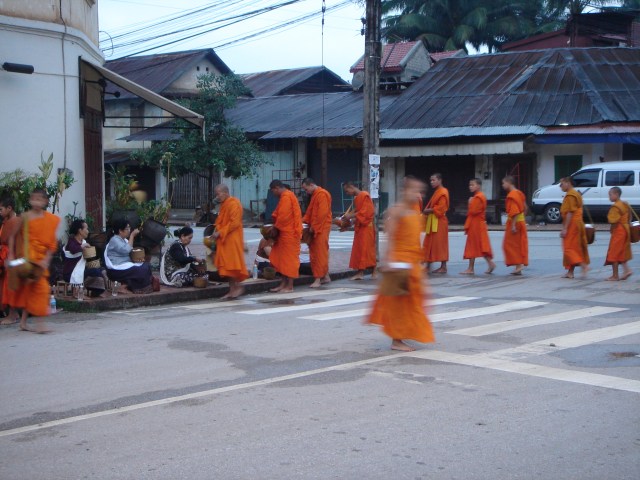
The Monks at dawn
For a small fee we could participate, however we were more than content to observe this event rather than be a part of it (I feel like it would have been far less authentic).
With a bit more morning sight seeing we were able to take in the old royal palace (Luang Prabang was the seat of the royal family prior to the 1975 communist takeover) which was a lovely old building, and a touch more understated than I expected.
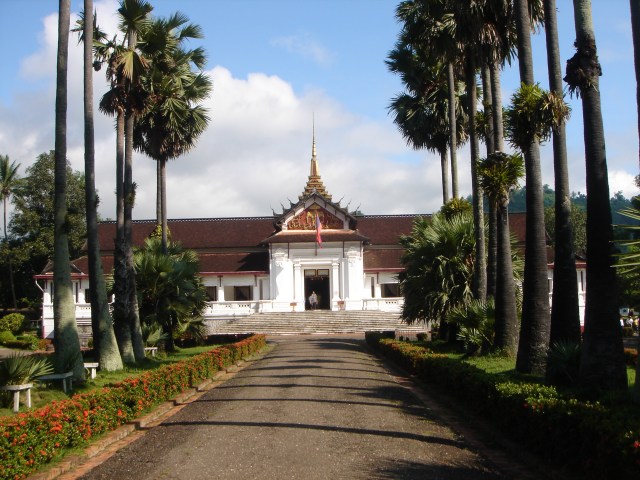
The Royal Palace
Our afternoon was spent travelling about 30km south of Luang Prabang to one of the more stunning locations we had ever seen, the Kuang Si Falls.
This gorgeous location consisted of several tiers of waterfalls broken by pools of the most lovely blue surrounded by lush vegetation.
One level of these falls is sacred to the monks, and therefore not open to tourists, but the rest is completely accessible. At the top it is possible to stand in the stream itself as it runs over the edge, as a rickety wooden barrier has been erected (and the depth and strength of the stream is also normally very low) whilst from the it is possible to ascend/descend on either side of the falls.
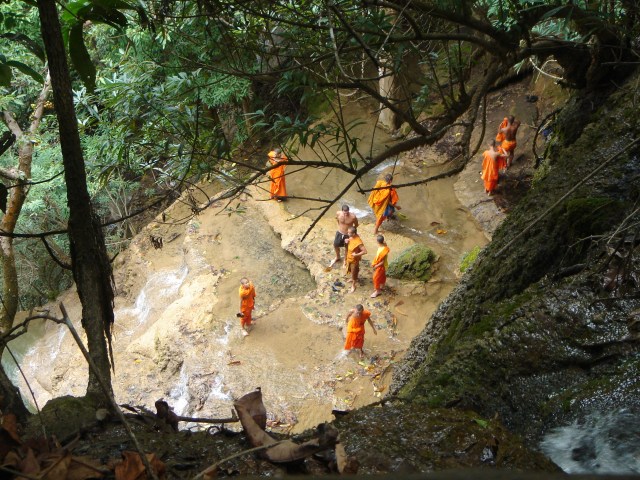
Our group chose the path that was included hand rails and steps, Sarah and I thought we’d descend on the opposite side of the falls on something that resembled the Kokoda track!
Slipping and sliding down this vertical “path” in our thongs proved a challenge, but when we got to the bottom boy was it worth it (true, we would have reached the same point on the easy path).
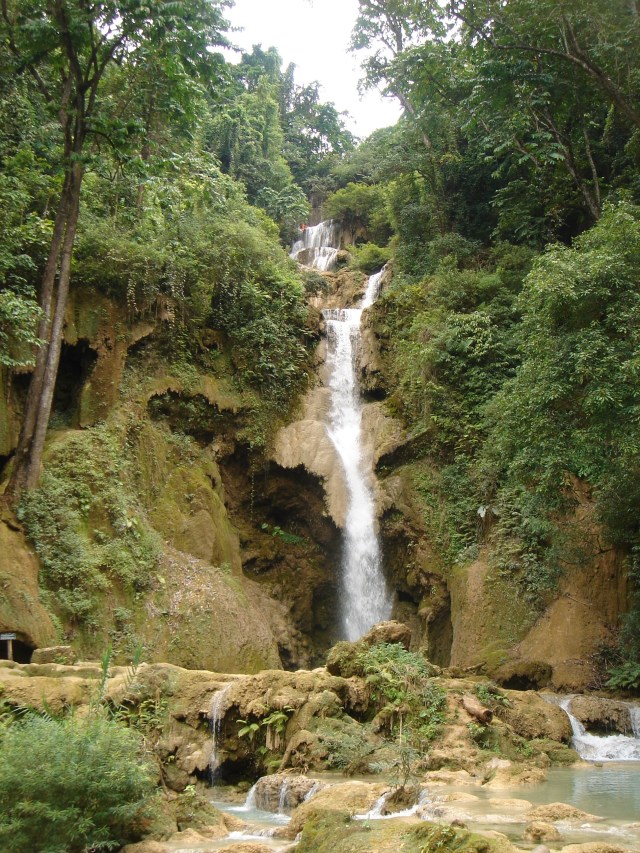
The Kuang Si Falls
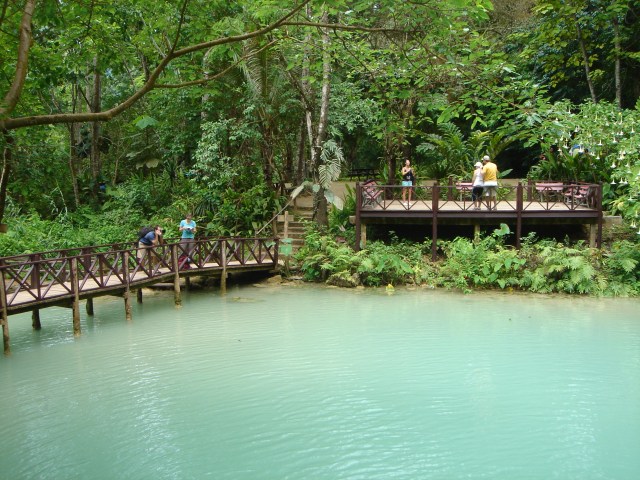
The beautiful pools
After our scramble to the bottom, we’d well and truly earned ourselves a dip and it really was such beautiful and refreshing water. One of the lower pools below some cascades even had a rope swing strung up from the branch of an overhanging tree, which Adam & I put to very good use.
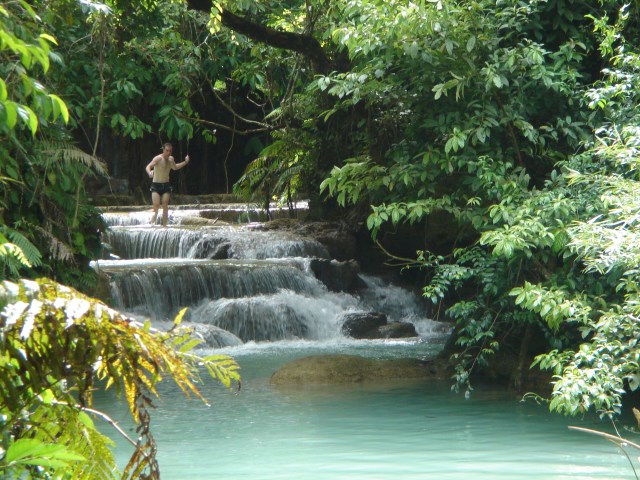
The cascades
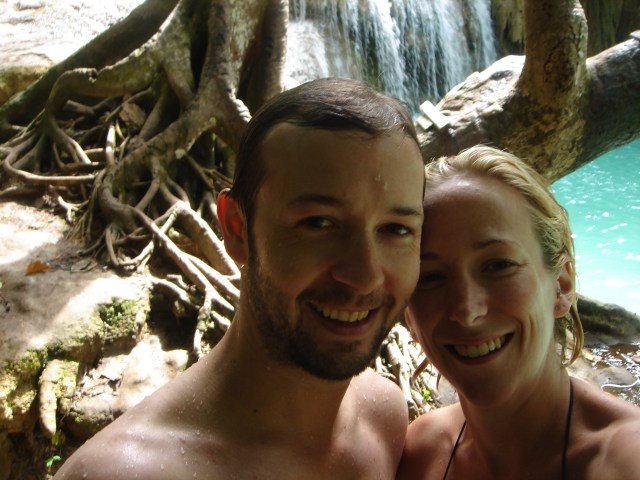
Sarah & I sharing a moment
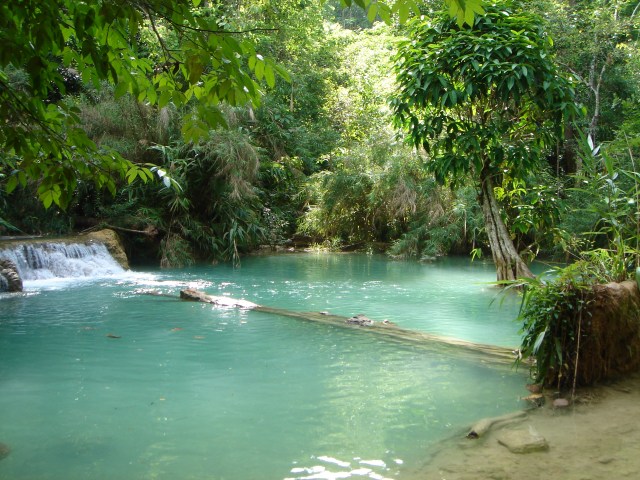
The lower pools
There was only one further aside before we left this lovely town. Somdy, our guide, actually calls the area around Luang Prabang his home and he generously invited all of our tour group to see his home and how his family live.
Unfortunately, Somdy’s wife passed away several years ago, so it is with the help of his extended family that he now raises his children.
One of the highlights of this little trip was an introduction to their local rice wine. What the family has is a large ceramic urn in which rice grains are placed and allowed to ferment. Then, as drink is required, water is added to the urn and the fermented juices flavour this water. Bamboo straws are used to drink and it can be made as strong or weak as one would like simply by added more (or less) water.
It was actually pretty tasty stuff.
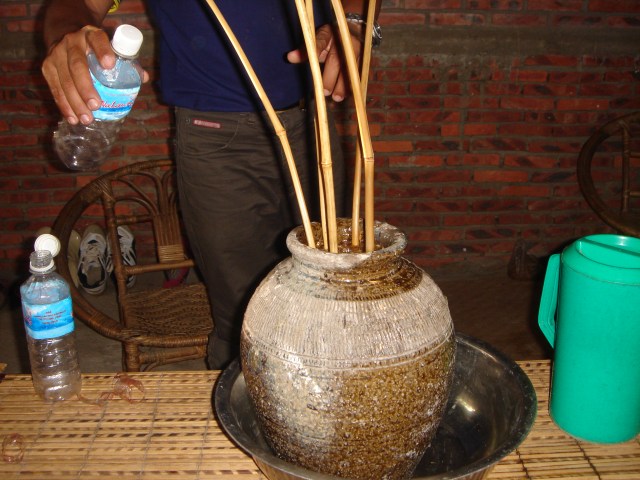
Rice wine with bamboo straws
 theworldwithchrisandsarah